

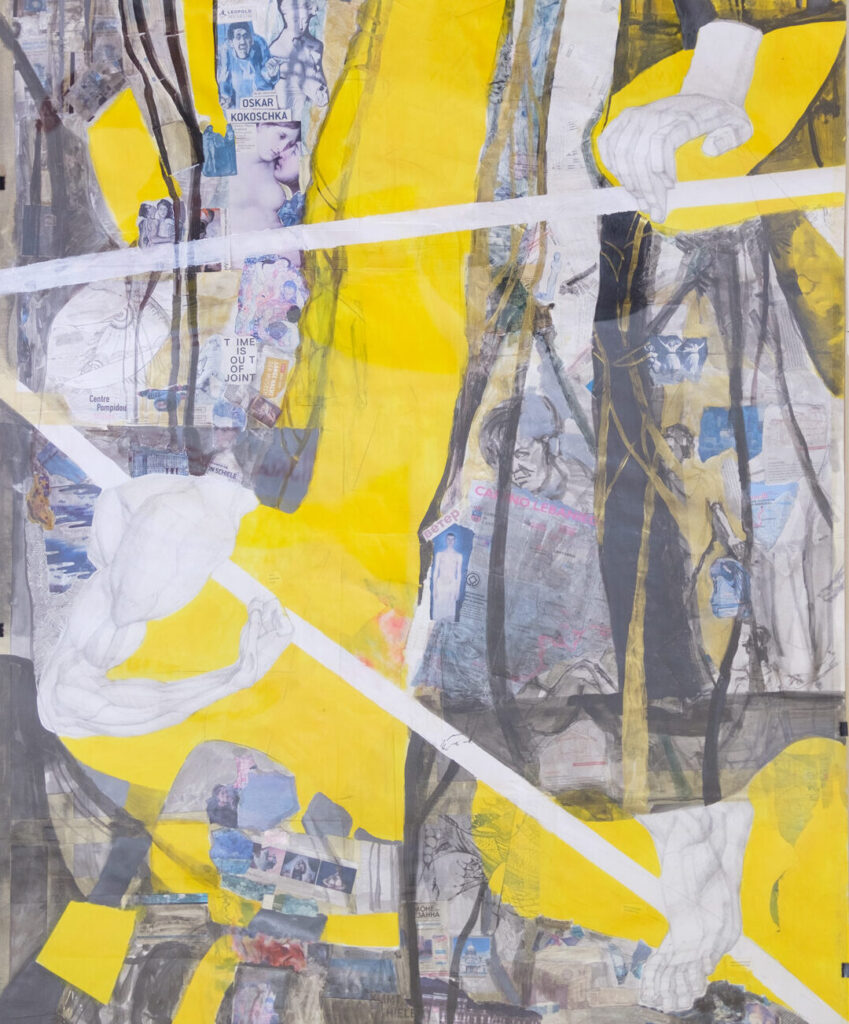
Previously, my work was not connected to specific cities. Overall — if I can generalize — my projects revolved around space and the object, their interaction and mutual influence. Let me list the major ones: Blue Room, Chicas en Camino, Yellow Brick. All of them contained philosophical undertones, narratives, characters, landscapes — but they were always generalized, composite images.


Since 2022, I’ve been working on a long-term “notebook” project, #tarjetas_Valencianas, from which several other projects have grown. In other words, #tarjetas_Valencianas is the seed and the main source of everything that followed.
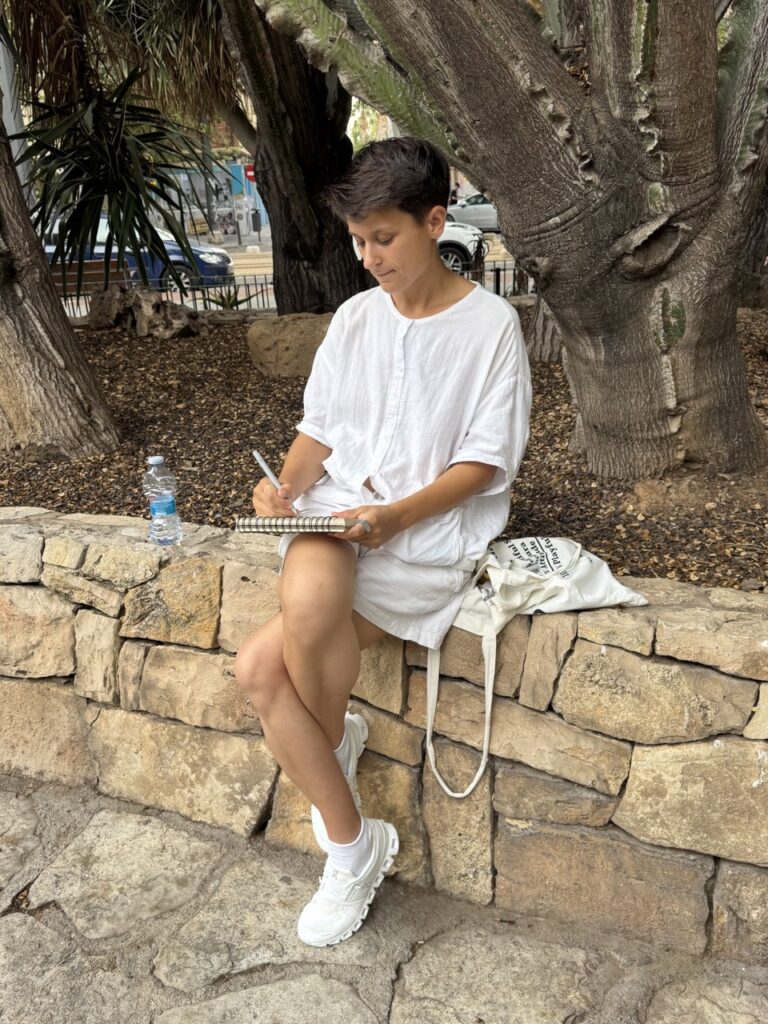
This project was born out of a desire to create quickly and with simple, accessible materials. Independence and simplicity are its core. Easy to create — easy to store — easy to transport.
This comes from the times I live in and from the lifestyle of not having a place for storage, nor a studio. Many paintings have been lost or are stored by different people — accidentally or intentionally (by the way, if you have one of my works, please write to me).
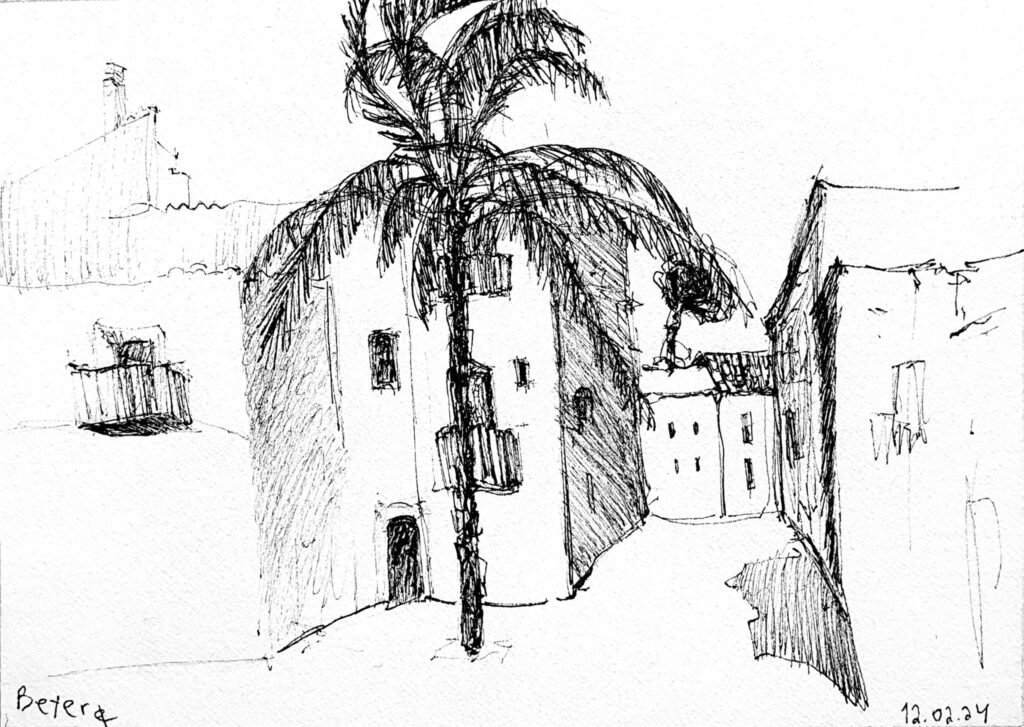
So why Valencia? What’s so special about it? And how does it differ from Chicas en Camino, a project also related to Spain and realized back in 2019?
Chicas en Camino emerged after a kind of “pilgrimage” across Spain (in 2019; more details can be found in other texts). In that project, specific places didn’t matter. What mattered most were states of being and the spiritual journey. One of its themes was comparing a pilgrimage with ordinary contemporary tourism.
Travel is an important part of my life, but only in the province of Valencia did I feel a true desire to paint the environment itself. This region is a treasure of rhythms, color spots, and compositions. My imagination here constantly offers new ideas. I see lines playing with me and forming a symphony of shapes — works waiting to be “performed.”
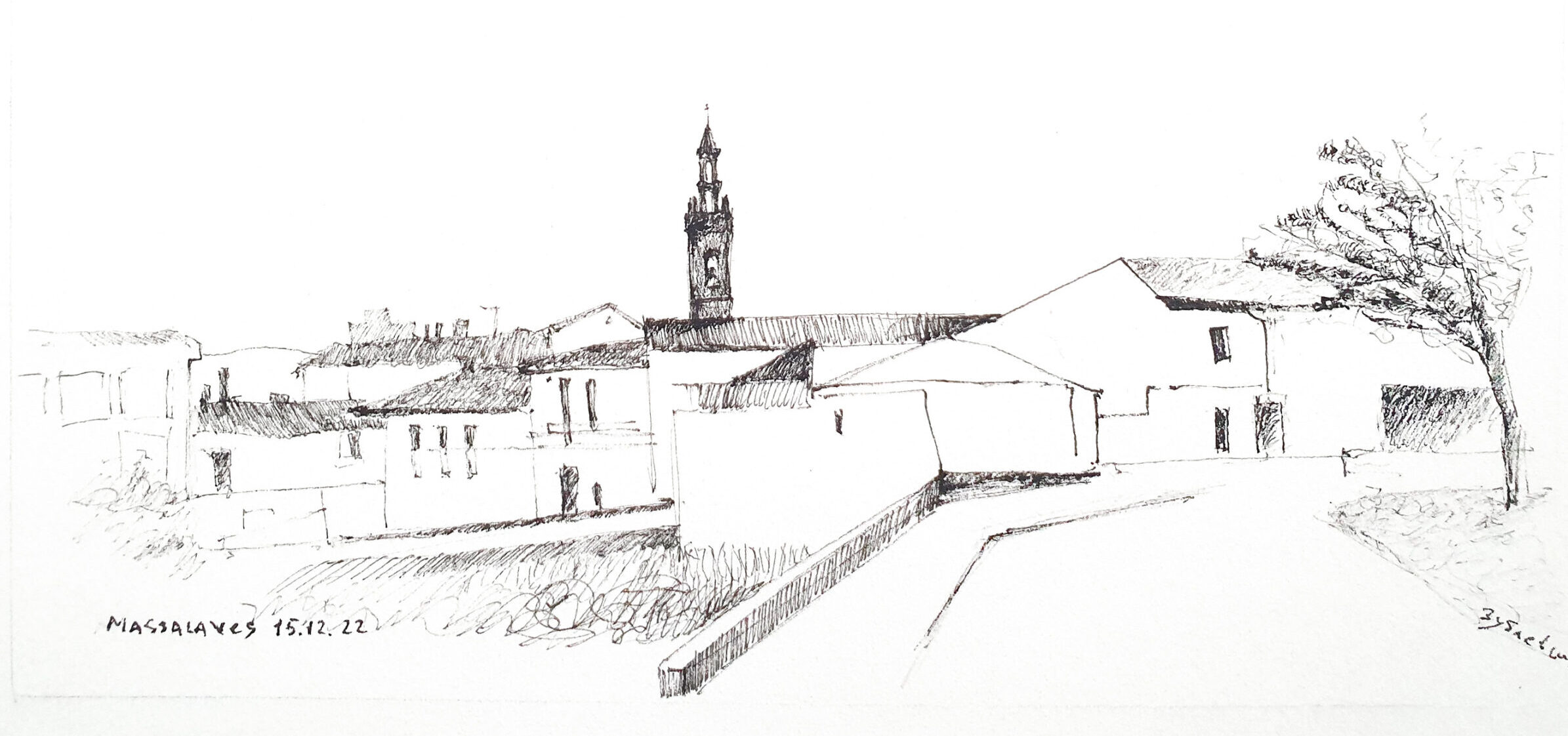
Perhaps this is the clearest explanation, because descriptive words cannot fully convey it. In no European city have I had such a vision. Take France, for example: as refined as its architecture and colors may be, the result is still a beautiful postcard.
Before writing this text, I mentally compared the places I’ve been to and tried to imagine how I would paint them in a way that would please me — without becoming a cliché. Perhaps there is a way; I even know which. But right now it feels distant. And still, it would be a very urban landscape.
Here, though, architecture is not exactly architecture (even though sometimes it is outstanding). But those parts of the landscape are not what interest me most.
What fascinates me more are the places where large and small forms interact… where a five-story building looms over a tiny house with old Spanish tiles; where a small hill suddenly appears and houses of whimsical shapes twist into an odd, yet captivating composition; where long palms peek between buildings, playing with each other or with the viewer.
Beyond the visual aspect, this urban landscape became a backdrop for storytelling — stories of the “temporarily displaced,” who in my imagination turned into a slightly alien-like figure. This happened due to the uniqueness of the local climate and atmosphere — a difference in degree, a difference in state. France, not far from Spain, doesn’t feel like “another world.” The climate, the urban landscape — for someone born in Lviv, this isn’t exotic. Yes, France feels like France, but the spirit of urban life there resonates with a familiar frequency.
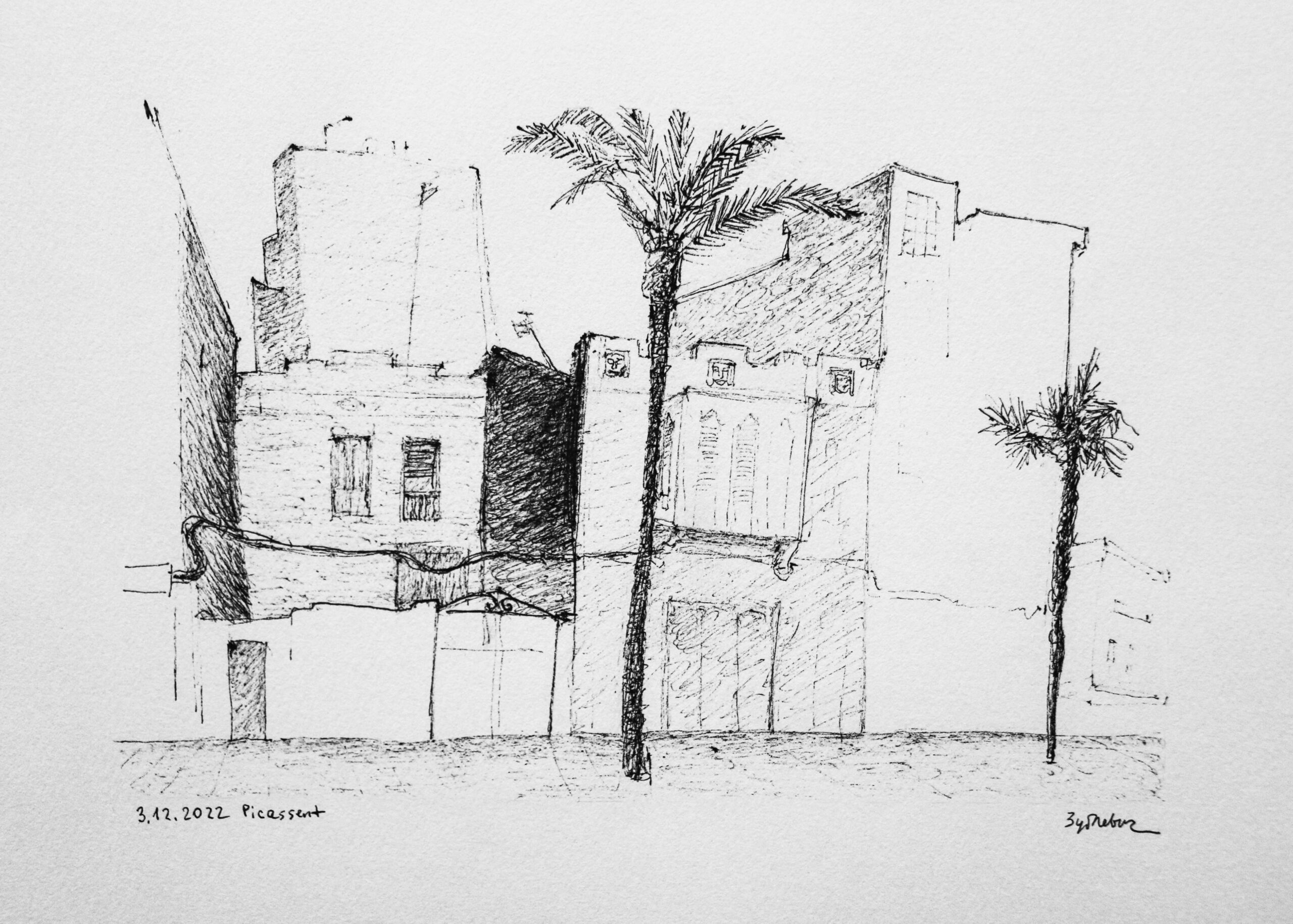
But here — the environment became the perfect stage due to its contrast and my internal state. On the one hand, I’m in a place I’ve always liked. On the other — I’m here not entirely by choice. Yes, by choice among European cities, but not by choice of relocation as a life fact.
Here, a character appeared: Extranjero, or alguien. A little figure in a stretched red sweater, black hat, and skin the color of Verde Compuesto 68.
This character reflects my internal state in relation to the external world I now inhabit.


If earlier my painting was more expressive, full of random strokes and drips, then in these Spanish projects I often find order and stylization. This comes from an internal desire for structure in at least something — and it strengthens the conceptual component: the scenography and the tension of perfectly and minimally arranged color relationships.
And although the environment in my works is a “set,” it still resembles real objects. I created a map on Google Maps where I marked the places where each drawing was made and attached the images. The viewer can trace the chronology of my movements and compare the original with the graphic version (as of 24.11.25, sketches from autumn 2022 to December 2024 are documented; sketches from 2025 have not yet been published and may never be).
By the end of 2025, the project is gradually exhausting itself. I have a few works left, and I think after that I will move forward — in search of new meanings. And although much remains unsaid, my creative state is changing, and now I’m waiting for the right moment and conditions to finally show the public the work of these years.
Olena Zublevych
24.11.25